Electrum wallet Is a secure Bitcoin storage and setup guide
Electrum wallet Is a non-custodial Bitcoin wallet for sending, receiving, and managing bitcoin without leaving coins on an exchange. It is best known for fast setup, seed phrase recovery, fee control, hardware wallet support, and advanced features such as coin control and multisignature wallets. Users should download only from official sources, protect backups offline, and verify important details before moving meaningful funds.
What is Electrum wallet?
Electrum wallet is desktop and mobile wallet software built for Bitcoin rather than a general multi-coin portfolio. It gives the user control of private keys, which means the wallet can authorize transactions without relying on an exchange account or a hosted custodian. That control is useful, but it also shifts responsibility to the person using the wallet. If the recovery seed or private keys are lost, there may be no support desk that can restore access.
Electrum wallet has been popular with Bitcoin users because it focuses on practical wallet tasks: generating receiving addresses, signing transactions, broadcasting payments, choosing fees, and restoring funds from a seed phrase. It is not meant to be an investment platform, a trading venue, or a guaranteed safety product. It is wallet software, and its value depends heavily on careful setup, secure devices, and disciplined backup habits.
For a new user, the most important concept is ownership of keys. When bitcoin sits on an exchange, the exchange usually controls the withdrawal system. With Electrum wallet, the user controls the wallet seed and the ability to spend. That distinction is the reason many people move bitcoin into self-custody, but it is also why mistakes can be costly. Bitcoin transactions are normally irreversible once confirmed on the network.
How does Electrum wallet work?
Electrum wallet creates a wallet file on the user’s device and derives Bitcoin addresses from a recovery seed. The seed is a human-readable backup that can recreate the wallet if the computer or phone is lost. The wallet connects to servers that provide blockchain information, so it can show balances and transaction history without downloading the entire Bitcoin blockchain like a full node would.
The protocol behind the user experience is straightforward: the wallet holds signing authority, while network servers help it learn what has happened on-chain. Electrum wallet can prepare a transaction, sign it locally, and then send it to the Bitcoin network. Because the signing step happens in the wallet, protecting the device and seed phrase matters more than the appearance of the interface.
Electrum wallet also supports more advanced workflows. Users may connect a hardware wallet, build a multisignature setup, or work with partially signed Bitcoin transactions, often called PSBTs. These features are useful for people who want to separate daily spending from deeper storage, coordinate approvals across devices, or inspect a transaction before it is broadcast. They are powerful tools, but they require patient testing with small amounts first.
How to get started with Electrum wallet safely
Electrum wallet setup should begin before any bitcoin is moved. The safest workflow is to slow down, verify the source of the installer, create a wallet, record the seed phrase offline, and confirm that the backup works. Users should avoid downloading wallet software from ads, random mirrors, social links, or files shared in chat. Fake wallet downloads are a recurring risk in cryptocurrency.
Electrum wallet usually asks the user to choose a wallet type, create or restore a seed, confirm the seed, and set a local password. That password protects the wallet file on the device, but it does not replace the seed phrase. The seed remains the recovery method. A strong password is still important because it reduces the risk from casual device access, malware that steals files, or a misplaced laptop.
A sensible first setup often looks like this:
Download Electrum wallet from the official project source and verify the version when possible.
Create a standard wallet unless there is a clear reason to use multisignature or hardware-only workflows.
Write the seed phrase on paper or another offline medium and keep it away from cameras and cloud storage.
Set a strong wallet password and store the device itself securely.
Receive a small test amount, wait for confirmation, and practice restoring or viewing the wallet before sending more.
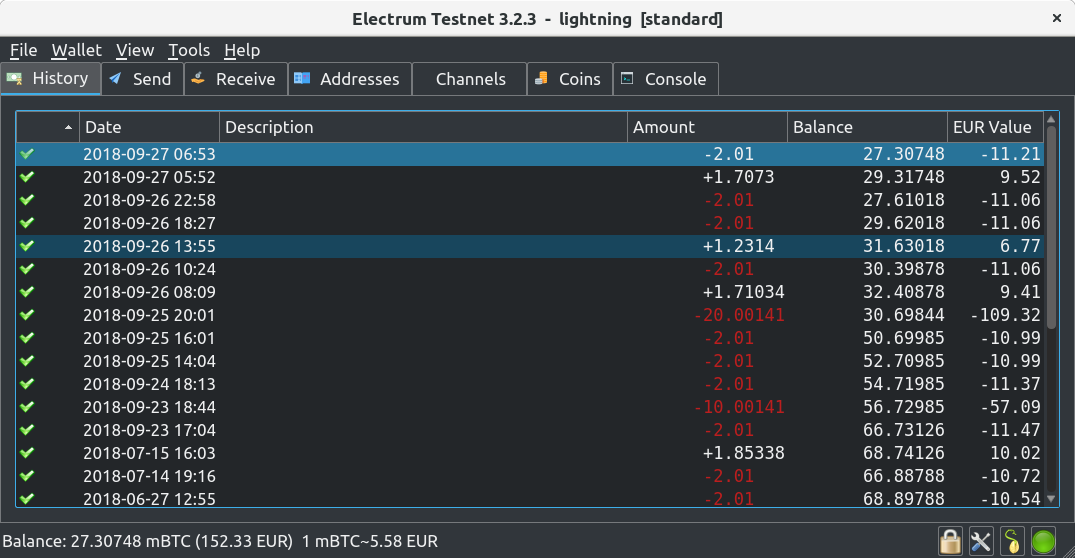
Electrum wallet may display balances in units that are unfamiliar to people expecting only whole bitcoin notation. Users should check display settings and confirm whether values are shown as BTC, mBTC, bits, or satoshis. This avoids the common surprise of seeing a number that appears larger or smaller than expected because the unit is different.
Receiving and sending Bitcoin with Electrum wallet
Electrum wallet provides receiving addresses that can be copied into an exchange withdrawal page or shared with someone sending bitcoin. Before using an address, the user should confirm it inside the wallet and check the beginning and end after pasting it elsewhere. Clipboard-changing malware is a real risk, so address verification is not just a formality.
When sending bitcoin, Electrum wallet lets the user enter a destination address, choose an amount, review a network fee, and sign the transaction. The fee is paid to Bitcoin miners through the network, not to the wallet as a simple service charge. Fee levels change with network demand, so users should review the current estimate instead of assuming yesterday’s fee will still be appropriate.
Electrum wallet can show unconfirmed transactions while they wait in the mempool. A transaction may appear quickly but still need confirmations before the receiver treats it as final. For small personal transfers, one confirmation may be enough for some users; for larger transfers, more confirmations may be expected. There is no universal rule that fits every situation, so users should verify requirements with the party receiving funds.
For more detail on practical first-use flows, a page such as can focus on installation, recovery seed handling, and first transaction checks. A separate guide to can help users understand fee estimates, replace-by-fee, and confirmation timing without mixing those details into every basic explanation.
Why do people use Electrum wallet?
Electrum wallet is often chosen by users who want a focused Bitcoin wallet instead of an exchange account or a broad crypto app. Its strengths are control, speed, mature Bitcoin features, and compatibility with more secure storage patterns. A user can keep a small hot wallet for daily use, connect a hardware wallet for larger holdings, or build a multisig arrangement for shared custody.
Electrum wallet is also useful for people who care about transaction-level control. Coin control, address management, manual fee selection, and replace-by-fee can matter when the network is busy or when privacy habits are important. These tools do not make a user anonymous, but they can help prevent sloppy transaction handling. Good privacy still requires broader operational discipline.
In practice, Electrum wallet works well for several common needs: withdrawing bitcoin from an exchange, receiving payments, sending funds with adjustable fees, watching addresses, signing from a hardware device, and recovering a wallet from a seed. It is not a substitute for understanding Bitcoin basics. The more money involved, the more important it becomes to test the process before relying on it.
Is Electrum wallet safe?
Electrum wallet can be safe when downloaded from the correct source, used on a clean device, and paired with sound backup practices. The wallet’s non-custodial design means there is no exchange holding the keys, which reduces custodial risk. It does not remove personal security risk. Malware, phishing, fake updates, weak passwords, exposed seed phrases, and rushed transactions can still lead to loss.
Electrum wallet users should treat the seed phrase as the wallet itself. A photograph, cloud note, email draft, or unencrypted file can expose the wallet if the account or device is compromised. Paper has its own risks, including fire, water damage, and simple misplacement, so some users use metal backups for larger amounts. Whatever method is chosen, the backup should be readable, private, and recoverable.
Electrum wallet safety also depends on update habits. Users should verify announcements and downloads through official project channels, especially after seeing popups, search ads, or social posts. A malicious installer can look convincing. Before installing a new version, it is reasonable to check signatures or hashes if the user is comfortable with that process, and to keep older wallet backups available.
No wallet can guarantee protection from every mistake. Electrum wallet gives capable users strong tools, but strong tools still require careful handling. Anyone managing significant value should consider hardware wallets, separate devices, multisignature policies, and written recovery procedures. This is general education, not financial advice, and users should verify wallet details with official sources before making security decisions.
Electrum wallet compared with exchanges, hardware wallets, and mobile wallets
Electrum wallet sits in the middle of several Bitcoin storage choices. It offers more control than an exchange account, more configurability than many simple mobile wallets, and more convenience than fully offline signing setups. The right choice depends on the user’s threat model, technical comfort, and amount at risk. A small learning wallet and a long-term savings wallet may not need the same setup.
Option
Main advantage
Main tradeoff
Electrum wallet
Strong Bitcoin control, fee options, and recovery seed ownership
User must manage device security and backups
Exchange account
Simple buying, selling, and account recovery
Private keys are usually controlled by the platform
Hardware wallet
Private keys can stay isolated from an internet-connected computer
Requires buying and learning a separate device
Basic mobile wallet
Convenient for small everyday payments
May offer fewer advanced Bitcoin controls
Electrum wallet can work alongside a hardware wallet, which is often a strong combination. In that setup, Electrum wallet may provide the interface while the hardware device approves signatures. This can reduce the risk of exposing private keys to a general-purpose computer. Users still need to verify addresses on the hardware device screen and keep the hardware recovery phrase secure.
Common risks and mistakes with Electrum wallet
Electrum wallet problems are often not caused by the wallet software itself but by setup errors around it. A user may save a seed phrase in a screenshot, install from an unsafe download page, ignore address changes caused by malware, or send a large amount before testing the workflow. These mistakes are avoidable, but only if the user treats self-custody as an operational process.
Electrum wallet users should be especially careful with private key exports. Exporting private keys can expose individual addresses and weaken the safety of a wallet if the exported file is stored poorly. Most users do not need to export private keys for normal sending and receiving. The seed phrase or a hardware wallet recovery process is usually the correct recovery path.
Another risk is misunderstanding confirmations and fees. Electrum wallet may allow a transaction to be sent with a low fee, but a low-fee transaction can take longer to confirm when the network is busy. Features such as replace-by-fee can help in some cases, but they are not magic. Users should read the send screen carefully and understand the tradeoff between cost and timing.
When Electrum wallet is a good fit
Electrum wallet is a good fit for users who want Bitcoin self-custody and are willing to learn the basics of backups, network fees, and transaction review. It is especially relevant for people who want more control than a custodial exchange provides, but who do not want to run a full Bitcoin node just to manage everyday wallet activity.
Electrum wallet may be less suitable for someone who wants account recovery through customer support, a simple multi-asset portfolio view, or hands-off security. Self-custody requires attention. A user who cannot safely store a seed phrase may be better served by delaying the move, using very small amounts for practice, or choosing a custody arrangement that matches their current ability.
Electrum wallet remains one of the better-known names in Bitcoin wallet software because it focuses on a narrow job and exposes enough detail for serious users. The best way to approach it is calmly: verify the download, make a clean backup, test with small amounts, understand the fee screen, and review addresses before every transaction. Those habits matter more than any single wallet brand.
Reader rating:
4.4 / 5
based on 337 ratings
Questions and Answers
What is Electrum wallet used for?
Electrum wallet is used to store, receive, and send bitcoin in a non-custodial way. It gives users control of their private keys through a recovery seed, while connecting to servers for balance and transaction information. It is commonly used for exchange withdrawals, personal Bitcoin storage, fee-controlled transactions, hardware wallet workflows, and multisignature setups.
Is Electrum wallet only for Bitcoin?
Electrum wallet is primarily known as a Bitcoin wallet, and users should treat it as a Bitcoin-focused tool rather than a general multi-coin app. That focus is part of its appeal because the interface and features are built around Bitcoin transactions, addresses, fees, and recovery. Always verify the exact software and supported network through official sources before depositing funds.
Is Electrum wallet safe for beginners?
Electrum wallet can be safe for beginners who take setup seriously, but it is not risk-free. The user must protect the seed phrase, download from the correct source, use a strong password, and verify addresses before sending funds. Beginners should start with small test transactions and learn recovery steps before storing meaningful amounts of bitcoin.
Does Electrum wallet charge fees?
Electrum wallet lets users choose Bitcoin network fees when sending transactions. These fees go to the Bitcoin network’s miners, not simply to the wallet as a subscription or account charge. The required fee can change depending on network congestion and desired confirmation speed. Users should review the fee estimate carefully before signing and broadcasting a transaction.
Can Electrum wallet work with a hardware wallet?
Yes, Electrum wallet can be used as an interface for some hardware wallet workflows. In that setup, the hardware device keeps signing keys isolated, while Electrum wallet helps create, review, and broadcast transactions. Users should still verify addresses on the hardware device screen and protect the hardware wallet recovery phrase with the same care as any Bitcoin seed.
What happens if I lose my Electrum wallet seed phrase?
If you lose the Electrum wallet seed phrase and also lose access to the working wallet file or signing device, you may permanently lose access to the bitcoin controlled by that wallet. The seed phrase is the core recovery method. Store it offline, keep it private, check that it is legible, and avoid photos, cloud notes, or email copies.
How is Electrum wallet different from keeping bitcoin on an exchange?
Keeping bitcoin on an exchange is usually custodial, meaning the platform controls the key infrastructure and account recovery process. Electrum wallet is non-custodial, so the user controls the recovery seed and signs transactions. This reduces reliance on an exchange, but it also removes many account-recovery conveniences. The user becomes responsible for backups, device security, and transaction accuracy.
Seedless, secure Bitcoin wallet using Threshold Signatures.
BoldWallet is an open-source next-generation Bitcoin wallet that eliminates traditional security tradeoffs and single points of failure.
It uses Threshold Signatures (2of3) over your mobile devices â no internet needed for setup or signing.
ð Features:
⢠â Seedless setup using Threshold Signature Scheme (TSS)
⢠ð No seed phrases, no paper backups, no hardware wallets
⢠ð± up to 3 device-based key generation with 2 devices needed for signing
⢠ð PSBT-Signer compatible with wallets like Sparrow, Electrum, etc.
⢠ð P2P encrypted protocol between your devices, over Nostr or Local/Wifi-Hotspot
⢠ð« No internet required for setup or signing
⢠ð¦ Open-source, verifiable, and offline-capable
⢠𧾠Supports Mempool.space public or self-hosted for enhanced advanced privacy
acceder a la ubicación aproximada solo al estar en primer plano
Mientras la utiliza, esta aplicación puede obtener su ubicación aproximada mediante servicios de ubicación, siempre que el dispositivo los tenga activados.
acceder a la ubicación exacta solo en primer plano
Mientras la utiliza, esta aplicación puede obtener su ubicación exacta mediante servicios de ubicación, siempre que el dispositivo los tenga activados. Es posible que esto aumente el consumo de baterÃa.
Permite que la aplicación vea información sobre conexión a redes Wi-Fi (por ejemplo, si está habilitada la conexión Wi-Fi y el nombre de los dispositivos Wi-Fi conectados).
Permite que la aplicación cree sockets de red y utilice protocolos de red personalizados. El navegador y otras aplicaciones proporcionan los medios necesarios para el envÃo de datos a Internet, por lo que no hace falta utilizar este permiso para eso.
leer cont. de almacenamiento compartido
Permite que app lea contenido de almacenamiento compartido.
acceder a la ubicación aproximada solo al estar en primer plano
Mientras la utiliza, esta aplicación puede obtener su ubicación aproximada mediante servicios de ubicación, siempre que el dispositivo los tenga activados.
acceder a la ubicación exacta solo en primer plano
Mientras la utiliza, esta aplicación puede obtener su ubicación exacta mediante servicios de ubicación, siempre que el dispositivo los tenga activados. Es posible que esto aumente el consumo de baterÃa.
Permite que la aplicación vea información sobre conexión a redes Wi-Fi (por ejemplo, si está habilitada la conexión Wi-Fi y el nombre de los dispositivos Wi-Fi conectados).
Permite que la aplicación cree sockets de red y utilice protocolos de red personalizados. El navegador y otras aplicaciones proporcionan los medios necesarios para el envÃo de datos a Internet, por lo que no hace falta utilizar este permiso para eso.
leer cont. de almacenamiento compartido
Permite que app lea contenido de almacenamiento compartido.
acceder a la ubicación aproximada solo al estar en primer plano
Mientras la utiliza, esta aplicación puede obtener su ubicación aproximada mediante servicios de ubicación, siempre que el dispositivo los tenga activados.
acceder a la ubicación exacta solo en primer plano
Mientras la utiliza, esta aplicación puede obtener su ubicación exacta mediante servicios de ubicación, siempre que el dispositivo los tenga activados. Es posible que esto aumente el consumo de baterÃa.
Permite que la aplicación vea información sobre conexión a redes Wi-Fi (por ejemplo, si está habilitada la conexión Wi-Fi y el nombre de los dispositivos Wi-Fi conectados).
Permite que la aplicación cree sockets de red y utilice protocolos de red personalizados. El navegador y otras aplicaciones proporcionan los medios necesarios para el envÃo de datos a Internet, por lo que no hace falta utilizar este permiso para eso.
leer cont. de almacenamiento compartido
Permite que app lea contenido de almacenamiento compartido.